What I keep getting wrong about my niece's skincare drawer
An eleven-year-old's bathroom shelf had a retinol eye cream on it. The Connecticut Attorney General's recent settlement with Sephora is putting warnings on adult-grade actives sold to under-13s. A Melbourne beauty editor on what brand-side complicity looks like and what to give to a tween instead.

My niece is eleven. Her bathroom shelf, last Sunday when I was over for tea, had nine products on the second tier. Three of them I would not put on my own face without a long pause. A Sol de Janeiro mist I could smell through the cap. A glass dropper bottle of what the box called a brightening serum. A Drunk Elephant moisturiser she got from a friend’s mum in a goodie bag at a tenth birthday in March. The bag had also contained a tiny tube of retinol eye cream.
The retinol eye cream was the part that made me sit down on the edge of the bath.
I have been writing about beauty for about a decade. Five of those years I spent on the brand side, which is to say I learnt how to read a press release the way a pathologist reads a slide. The thing I have taken longest to work out, and I am not sure I have entirely got there yet, is how to talk to the next generation of customers about products that are not, in any reasonable sense, designed for them.
Last month the Connecticut Attorney General’s office announced a settlement with Sephora that, on paper, is about labelling. Sephora has agreed to put clear warnings on its website for any product that is not suitable for children under thirteen. They have agreed to a dedicated resource page identifying those products, and to train staff to flag them. The investigation that led to the deal began in November 2024, prompted by anti-aging serums and brightening kits showing up in search results for “skincare for kids” and “gifts for children”. Fifteen months it took.
William Tong, the Connecticut AG, said something in his statement I have been turning over since. “Our kids,” he said, “especially tween and teen girls, are inundated with influencer content pushing product after product loaded with messages about appearance, hygiene and self care.” Read it again. The bracket Tong put around hygiene is the bit that gets me. We have moved, somewhere in the last five years, from teaching children to wash their faces to teaching them to manage them.
The receipts back him up. According to Cult Beauty’s Gen A-Z Skincare Guide, Gen Alpha is starting on skincare at eight. Gen Z started at thirteen. So, five years earlier in roughly half a generation. That is a lot of skin barriers in trouble.
The bottle, read aloud
Let me be precise about what I am and am not panicking about. Hyaluronic acid, fine. Glycerin, fine. Sunscreen, frankly, is the most important thing on the shelf and the one most likely to be missing. Dr Emma Craythorne, a London consultant dermatologist who runs the Klira clinic and chairs the British Cosmetic Dermatology Group, put it about as plainly as a doctor will. “Skincare should be taught from an early age,” she told Glamour in April. “It is important that young children understand how to wash their hands and face properly as well as using sunscreen for face to protect their skin.” Cleanse. Moisturise. Sunscreen. End of list, for an eleven-year-old.
Trouble starts at the actives. Retinol, which is what was in my niece’s eye cream, is a vitamin A derivative that increases skin cell turnover by chemically thinning the stratum corneum. On adult skin with mature barrier function, used in low concentrations and at night, it is one of the most studied and effective anti-aging ingredients we have. On developing skin, it is a different conversation entirely. So are the stronger acids. Glycolic. Lactic. Mandelic. Anything that sloughs.
Dr Andrew Carlson, who runs the primary care division at Connecticut Children’s Hospital, said it like a doctor too. “We’re seeing more and more children using skincare products that were never designed for developing skin.” The word “never” is doing the work in that sentence. These products were not formulated, tested or marketed with under-thirteens in mind. They are landing in their bathrooms anyway, sometimes through the same goodie bag pipeline that used to deliver lip gloss and butterfly clips.
The brand-side bit
Here is where I owe you some honesty.
When I worked on the marketing side for a Sydney indie skincare label between 2020 and 2023, we knew our customer skewed younger than our marketing claimed. We did not target children. Almost no Australian brand does, openly. But the reality of TikTok in 2024 and 2025 was that a “Get Ready With Me” video by a fourteen-year-old could move more units in a week than a six-month influencer programme. We knew. We did not put out a press release about it.
The polite industry term for this is “demographic drift”. The honest term is that the algorithm decided who our products were for, and we did not push back hard enough.
Dr Sreedhar Krishna, a London dermatologist who co-founded SkinDoc, has been calmer about it than I would be. “This is when hormonal changes can lead to skin issues like acne,” he said of puberty, “making it crucial to establish good skincare habits early on.” His point being that the right answer is not abstinence, it is appropriate. Habits, not haul.
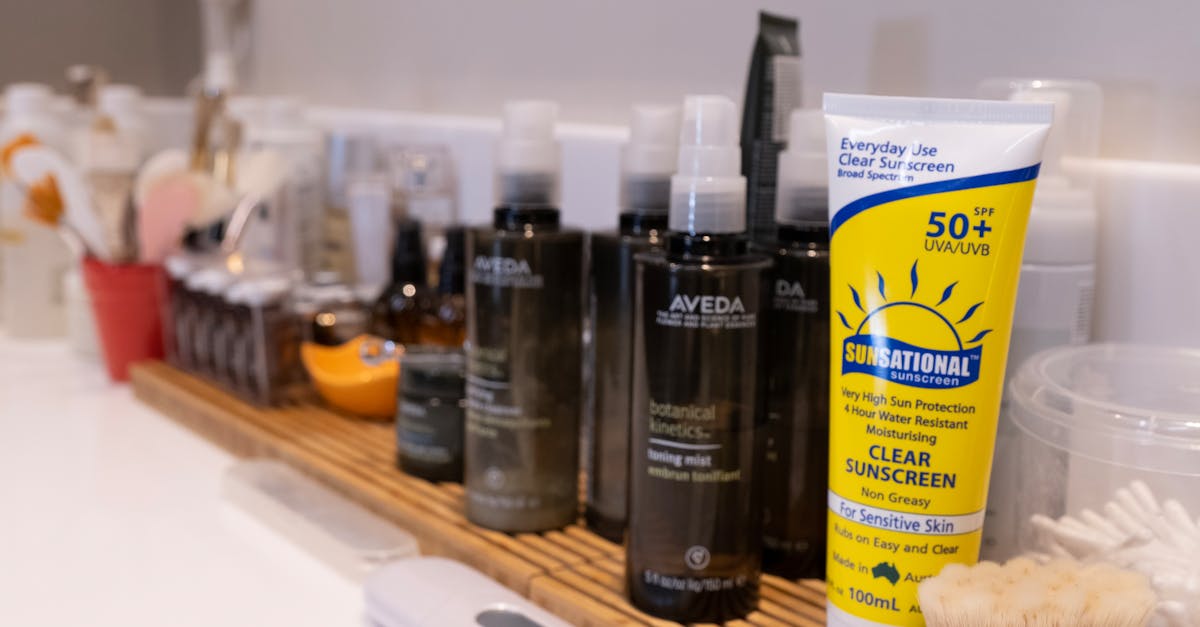
What appropriate looks like, in product terms, is dull. A non-foaming gentle cleanser. A basic cream moisturiser with not much in it. A broad-spectrum SPF 30 or above for the morning. If acne shows up, a hydrocolloid spot patch with one per cent salicylic acid for the localised problem and nothing else. A friend in Bondi showed me her thirteen-year-old’s Restored patches a fortnight ago and I admit I went home and bought a packet for myself. They are very good.
The price problem nobody is talking about
Now for the bit nobody has put alongside the cosmeticorexia conversation, which I think is going to bend the curve of all of this.
Australians spend, on average, $454 a year on cosmetics, per Statista. The total beauty and personal care market is forecast at $12 billion in revenue this year. Both numbers are about to get squeezed.
The squeeze is coming from the Strait of Hormuz. Sebastien Jagut, who runs procurement and business development for New Directions Australia, the cosmetics raw-materials wholesaler out of Marrickville, told the ABC in early May that petroleum-derived ingredients are already costing more, and that supply continuity, not just pricing, is what worries him. Glycerin. Petrolatum. Mineral oil. Silicones. Glycols. Polyvinyl alcohol. The boring grease and water that holds half your bathroom shelf together.
“Given Australia’s reliance on imported raw materials,” Jagut said, “this adds significant pressure across the supply chain. Beyond pricing, the real concern is supply continuity. Delays, reduced availability, and longer lead times are becoming increasingly likely.”
Amina Kitching, who founded the LOAEL global beauty group and has been pushing the Australian industry toward organic standards for a decade, called it a perfect storm. “The cost of raw materials and plastic packaging has hit record highs,” she said, “making the production of lipstick, creams and plastic containers significantly more expensive.”
Translation. The boring basics are about to cost more. The maximalist nine-product shelf my niece has built is a stack of imports, and the imports just got pricier. Likely outcome, if I had to bet, is that consumers down-trade by SKU count, not by category. Three products instead of nine. Which is, oddly, what the dermatologists were asking for in the first place.
Mother’s Day, by the way
It is the Friday before Mother’s Day as I write this. Australian Mother’s Day spend is forecast at $1 billion this Sunday, with the average shopper dropping $141 and roughly forty-six per cent of purchases happening in the final week, per the Business Victoria and Roy Morgan figures Retail Beauty pulled together this week. The Retail Beauty gifting edit, which landed Monday, has the familiar architecture. Premium beauty tech anchoring the top. Treatment-led haircare in the middle. Skincare split between accessible glow kits at the bottom and clinical efficacy at the very top.
Not telling you what to buy. But if you are gifting anything to anyone under fifteen this Sunday, the option that ages best is a bottle of basic broad-spectrum sunscreen and a tin of plain Cetaphil, in a card. I know that is not a sexy ending. The Pharmacie Avène pop-up at Chadstone, running 7 to 9 May, would also do nicely.
What I am still working out
We are not going to legislate our way out of this in Australia, the way Connecticut sort of did. Sephora Australia’s compliance with the New England agreement does not flow through automatically, and the labelling regime here is not currently demanding anything close. We will get to it. The time horizon is years, though. The eleven-year-olds are eleven now.
What I have started doing instead, and I might be wrong about it, is this. When my niece is over, I open the bathroom drawer with her. We read the back of bottles aloud together. We talk about what the words mean. Sometimes she puts the product back. Sometimes she does not. The Sol de Janeiro mist still smells like a confectionery aisle and that, I have come around on. The retinol eye cream lives in a drawer in my own bathroom now, where it can wait its turn.
The brand side of me knows none of this is a solution. The auntie side does not particularly care.
Tahlia Park
Melbourne beauty editor and ingredient nerd. Five years on the brand side before turning to writing about what's actually in the bottle.