Last Course: Quay Closure and the Crisis in Australian Fine Dining
Quay held three Good Food Guide hats for 24 years before closing on Valentine’s Day this year. I spent a week talking to chefs, owners and regulars about whether haute cuisine in Australia has an expiry date.

I last ate at Quay in the summer of 2023. Mid-January, that stretch between Christmas and Australia Day when Sydney sits under a heat shimmer and the harbour glares white. A friend’s milestone birthday. Twelve of us at the long table by the window. The menu that night ran to nine courses and I remember thinking, midway through the fifth course, a piece of Murray cod with a broth so clear you could read the grain of the table through it, that this was a kind of cooking you do not see much anymore. The kind where the work disappears and only the plate remains.
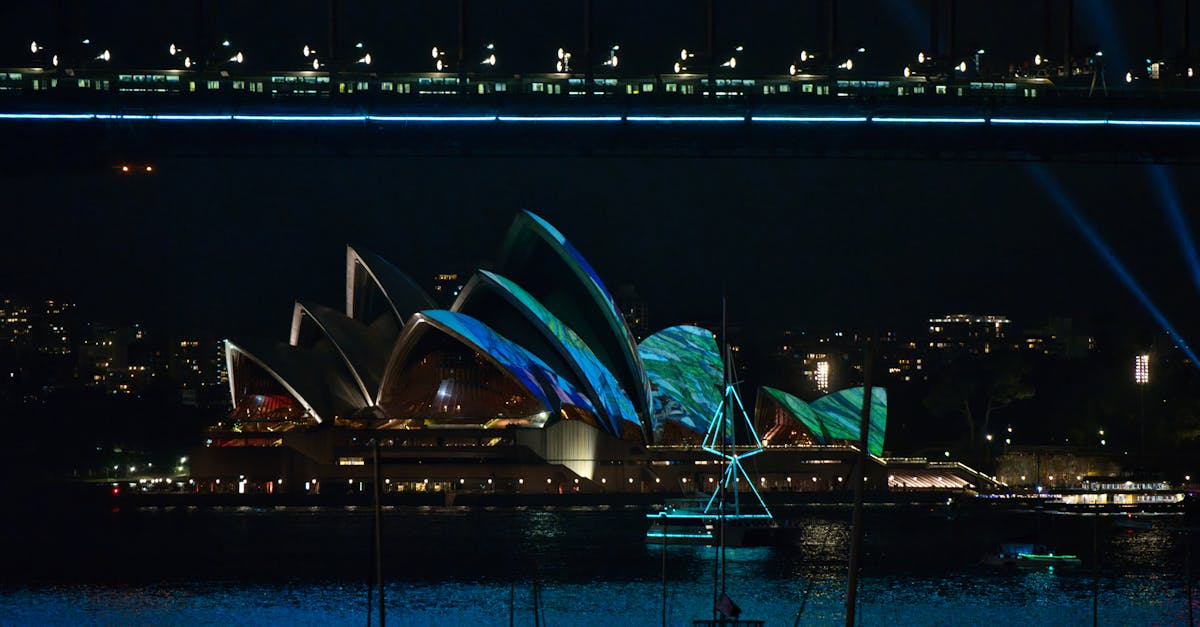
Quay closed its Circular Quay venue on February 14 this year. The only restaurant ever to hold three hats in the Good Food Guide for 24 consecutive years. Twenty four. The owner, Leon Fink, pointed to rising operational costs, lagging tourism and, most tellingly, what he called the suburbanisation of the hospitality sector. The phrase stuck with me. Not because it is new. Hospitality types have been muttering about it for years. But Fink is the first person with actual skin in the game to say it out loud in public.
Federico Zanellato, who runs Lode and LuMi in Sydney, put it more bluntly when Good Food spoke to him. He wonders if fine dining has an expiration date. Not whether, but if. It is the kind of question a chef asks when the maths stops working. And the maths, across the board, has stopped working.
I called a chef I know who runs a hatted place in Melbourne’s CBD. He asked not to be named because he does not want his landlord to read this. My rent went up 40 per cent in three years, he said. Forty per cent. And I cannot put my prices up 40 per cent because my customers will stop coming. So I absorb it. And I absorb the wage increases and the insurance and the power, and at the end of every month I look at the P and L and ask myself why I am doing this.
He is not alone. The numbers out of the UK, where the situation is arguably worse, paint a grim picture. Michelin-starred chef Jason Atherton told the Guardian last week that he is opening restaurants overseas to subsidise his UK venues. I have restaurants that are losing money, he said. We are not asking for handouts, we are asking for a fair chance to stay alive. Atherton, who has five Michelin stars across his career, now operates in Dubai, St Moritz and most recently Forte dei Marmi in Tuscany, where he is opening Maria’s at the Principessa hotel. His UK venues pay 20 per cent VAT, one of the highest restaurant tax rates in Europe. The European average sits around 12 per cent. Italy charges 10 per cent on food sold in restaurants. UKHospitality, the industry body, has calculated that the average British restaurant faces an extra 32,000 pounds in tax this year alone from business rate increases.
The comparison is not one-to-one. Australia’s tax structure is different. But the underlying pressure is the same. Rising rents. Higher food costs. Labour shortages. And customers whose disposable income is being squeezed from every direction. The Times Australia recently ran a piece noting that while restaurants continue to fill on Friday and Saturday nights, many venues are not generating the kind of profits that make the enterprise sustainable. People are eating out less often and spending more carefully when they do. Lunch specials, once the domain of the quick-and-cheap, have become a serious battleground. Gourmet Traveller’s recent roundup of Sydney’s best fine-dining lunch deals listed 13 venues offering set menus between 15 and 120 dollars. The Wine Bar at the International does a 15-dollar pizza. Petit Loulou does a baguette sandwich, salad and Orangina for the same price. Cho Cho San in Potts Point does a bottomless banquet for 99 dollars a head.
These are not desperate measures. They are adaptive ones. But the speed of the adaptation is what has the industry nervous.
The thing about Quay
What made Quay’s closure land differently was not the restaurant itself, though it was exceptional, but what it represented. A three-hat restaurant should be bulletproof. It has the reputation, the regulars, the waiting list. If a restaurant of that calibre cannot make the economics work, what hope does the rest of the sector have?
This is the question that sits underneath every conversation I had this week with people in the industry. The headline from the Good Food piece that broke the story put it plainly: If Quay cannot do it, how can anyone?
It is not just Quay. Onzieme, the acclaimed Restaurant of the Year nominee in Canberra, also closed this year. The ACT dining scene, never robust, has taken a hit that feels existential. Aggressive poaching within the industry has compounded the perennial staffing shortages. Chefs are being offered sign-on bonuses and relocation packages, perks that used to be reserved for corporate executives.
And yet.
And yet there are new restaurants opening. The best new openings in Sydney this winter, as catalogued by Gourmet Traveller this week, include several ambitious venues. Brent Savage, the chef-owner of Bentley Restaurant and Bar, Monopole and Yellow, is debuting a new project. Chris Lucas is bringing Wishbone Melbourne to Bourke Street. The Vivid Fire Kitchen at Barangaroo, which we covered earlier this month, drew crowds that suggested Sydney’s appetite for dining out has not dimmed.
What has changed is what diners are willing to pay for. The tasting menu at the destination restaurant is no longer an automatic sell. The mid-week walk-in at the neighbourhood wine bar is. The Time Out Food and Drink Awards published last week made this shift explicit. The winners were not the temples of haute cuisine but the bars, bistros and suburban newcomers that had found a way to do quality without pretension.
The international view
The pressure is not uniquely Australian. Atherton’s story is instructive because it shows what happens when a chef of his stature decides the domestic market is no longer viable. He is not opening abroad because he wants to. He is doing it because he has to. If we did not have a global brand we would find it tough, he said. All I know is that the tax on hospitality in the UK is the highest in Europe. Ireland VAT is 9 per cent. We are 20 per cent. Hospitality in Ireland is booming.
Atherton has been deliberate about keeping his prices accessible. At Three Darlings in Chelsea, the average lunchtime spend is 30 pounds. At Row on 5 in Mayfair, which earned two Michelin stars, he did not raise prices after the second star arrived. He also made a point of keeping a pint of beer under a fiver after seeing a news report claiming you could not get a pint in London for less than seven pounds. I thought, is that right? I looked at the margins and decided to knock our pint down so people can come and have a pint.
Atherton kept a pint of beer under a fiver in his Chelsea pub because he could not stomach the idea that a working person could not afford a drink in his establishment. I think about that more than I probably should. It is not a grand strategic move. It is just a bloke who remembers what it is like to want something simple and not be able to afford it.
What survives
Zanellato might be right that fine dining has an expiration date. But I think what is actually expiring is a version of it we got comfortable with. The version where a three-hat rating was enough to fill a room every night. That version is gone.
The new openings I am watching are not trying to recreate that room. Brent Savage has a project in the works that nobody will talk about yet. Chris Lucas is bringing Wishbone to Bourke Street. The Wine Bar at the International is doing a 15-dollar pizza and it is packed at lunch. These operators are not apologising for lowering the price point. They are betting that a room full of people having a good time at a fair price is a better bet than an empty room with a premium tasting menu.
I called a friend who has been in the industry longer than I have and asked him to talk me off a ledge. He laughed. Fine dining is not dying, he said. It is just getting smaller. The restaurants that make it will be the ones that treat dinner like something people actually want to do, not something they have to dress up for. Not an ordeal. Just a good meal.
I hope he is right. Because a Sydney without restaurants worth travelling for is a city missing something.
Henry Macarthur
Melbourne restaurant critic and drinks writer. Files from kitchens, bars and the long lunches in between.